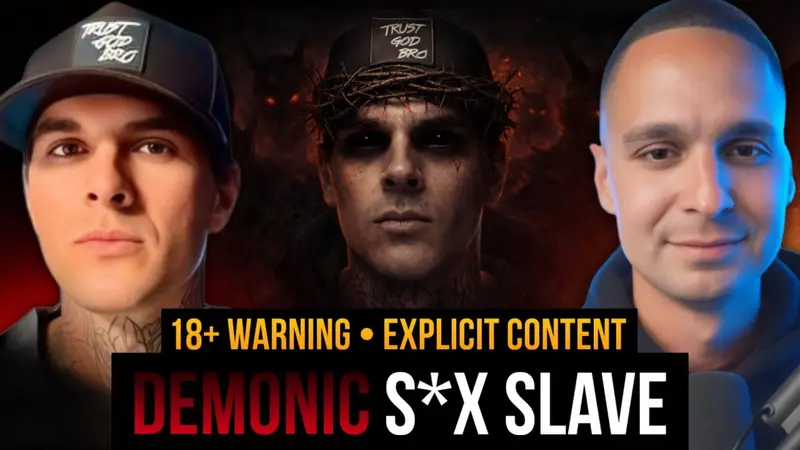
At 1:42:52 in Wyatt’s return to We Need to Talk, he says to leave if someone declines prayer. The five dollars offered remain a gift. He asks Christians to help people, explain their faith simply, and let the recipient choose whether to continue the conversation.
Ezekiel Azonwu gives this March 16, 2026 interview a different purpose from their first recording. He directs newcomers to the original testimony (03:37), then asks about training, authority, spiritual motives, and participation. Their friendship is warm, but the host still presses Wyatt to explain what viewers would be joining.
The ministry update after the first interview
Wyatt briefly recalls the encounter he believes ended the deception, then describes what he says followed: responses from viewers, Skid Row outreach and gatherings where people learn to share their faith (04:29; 05:55). Ezekiel’s questions move beyond growth itself. He wants to know what people are gathering for, what Wyatt asks of them and how the work reaches someone outside the gathering.
Ezekiel also shares what he remembers from their first meeting. He remembers Wyatt asking where to find homeless people when they first met (09:53). That recollection matters because it gives the host’s perspective on Wyatt’s priorities. Ezekiel is remembering ministry he saw firsthand: Wyatt wanted to meet people beyond the studio.
Wyatt also says he became afraid to approach people after a five-month detention following an accusation he denies (12:07; 13:30). He describes returning to service as a struggle with that fear. The ministry update therefore includes hesitation as well as enthusiasm. A person who urges others to go toward strangers admits remembering reasons to stay away. Ezekiel’s next question asks where Wyatt chose to go and why.
When Ezekiel asks why Skid Row, Wyatt explains that his attention is on people who cannot readily reach the events Christians organize for themselves (14:55; 16:20). He compares the energy spent attending worship gatherings with the effort that could be directed toward people outside those gatherings. His future expectations about healing are expressions of faith, while the immediate proposal is accessible: take the care to the person who cannot come to you.
Who gives someone permission to serve?
At 20:07, Ezekiel deliberately adopts the voice of a skeptical pastor. Who does Wyatt think he is? Where did he train? Why should people join this outreach rather than remain with their local churches? The questions bring ministry authority into the open. They are a role-played objection, not evidence that a particular pastor made these accusations.
Wyatt answers by recounting the failures from which he believes grace rescued him. He describes himself as someone made new and invites people to see the work. His reply is grounded in the work he credits to Jesus, rather than in a list of formal credentials (21:28).
Then he sets a boundary around the invitation:
“i don’t want anyone to submit to me i just want us to get together” (22:53)
He says he is not asking listeners to enter his denomination. Later, he states that he does not want to tear people from their churches (49:52). Those details belong beside his forceful criticism of Christian inactivity. His invitation, as expressed here, concerns shared service; it does not require making him the center of a person’s faith.
The discussion does not settle every question about training or accountability. It does make his intended relationship to participants clearer. Readers considering any invitation to serve can ask what the organizer expects from them. Is there room to participate without personal allegiance? Is the purpose understood? Can the work be examined in ordinary practice? Ezekiel’s role-play gives such questions a place in the conversation rather than leaving them beneath the enthusiasm.
Mercy also changes the one offering it
At 22:53, Wyatt makes a connection between offering mercy and recognizing one’s need for it. In his account, some people arrive wanting to repair their own lives. Showing up to help becomes part of accepting responsibility, rather than a display of having risen above everyone else.
Ezekiel later notices a danger in the interview’s spiritual-warfare language. A listener could leave it feeling hostile toward people associated with occult practices. He interrupts to insist that those people still have souls and need Jesus (37:39). His question at 38:27 asks how Christians can see a person they regard as wicked as someone who needs mercy.
Wyatt says being forgiven much leads to loving much, while minimizing one’s own wrongdoing encourages contempt. Ezekiel’s question brings the warning back to people: how should a listener approach someone they believe has done wrong, given their own need for mercy?
That helps explain why Wyatt repeatedly joins discernment with conduct. At 29:12, he describes the danger of accepting a version of Jesus that approves what he believes the real Jesus rejects. He distinguishes a mistake from settled permission to compromise. Ezekiel then explores the difference between an obvious opposite and something that takes Jesus’ place while sounding familiar (30:06; 30:55).
Their discussion asks how our convictions shape what we do. Examine whether it excuses gossip, judgment, or humiliation. Ezekiel wants listeners to remember that the person being discussed still needs mercy, rather than let a spiritual label place them beyond concern.
Living faith is more than a completed task list
At 46:58, Wyatt responds to the objection that he is teaching people to earn salvation through work. He says adding deeds to dead faith does not solve the problem. He wants action to follow living faith, describing service as an expression of changed relationship rather than a required total of tasks.
His scriptural language gathers several passages around care for others. At 18:44, he paraphrases Jesus’ instruction to feed his sheep and the least-of-these teaching about feeding, clothing and visiting. The speech blends wording from different passages; it should be heard as his exposition rather than a verbatim reading of one continuous text.
At 1:20:48, Ezekiel discusses Ephesians 6, an active stance in spiritual warfare, and being light in dark places. This is the host’s teaching, rather than an event in Wyatt’s life. His contribution develops the question of how Christians should act after hearing the testimony.
Near 1:39:06, he explains what he wants the episode to accomplish. He does not want to remain merely excited, or to leave viewers only admiring Wyatt. He suggests beginning with people already in one’s contacts. At 1:40:49, he returns to motive: time with Jesus should deepen the awareness of having been loved and forgiven, and compassion should move the person toward others.
Begin with somebody you can already contact. Consider why you want to approach them and what you can sincerely offer. Ask about their need, rather than reproduce Wyatt’s energetic delivery. The person’s answer should help determine whether and how the conversation continues.
A small encounter, with room for refusal
Wyatt’s practical instruction begins at 1:41:43. He proposes taking a modest amount of money to someone who could use it, expressing Jesus’ love and asking whether prayer would be welcome. Although he speaks with strong confidence about the value of the practice, he also says success does not occur in every encounter. The distinction helps prevent a single conversation from becoming a test the recipient is expected to pass.
The next block provides the essential conditions (1:42:52). A reader can follow its sequence:
- Choose a person and a form of help you can offer freely.
- Explain your intention in a brief, human conversation.
- Ask whether they want prayer or to hear more about your faith.
- Keep the gift unconditional, and leave if they decline.
Wyatt says the encounter does not need to become a complicated debate. He suggests telling the person, simply, about the God he believes has helped him and loves them. The offer can stand without an argument or a demand for an immediate conversion.
The money is an example, and he later mentions smaller amounts. Its purpose is to make generosity tangible. The recipient’s freedom to refuse remains the more important principle: accepting assistance is not consent to everything the giver wants to say or do. Here Wyatt makes that freedom explicit.
At 1:45:43, he says his hands-on teaching is free. Ezekiel then gives viewers an assignment and invites them to report their experience (1:46:30). It is a specific response to the problem of watching others act. The episode’s requested outcome is a person beginning to serve, rather than another approving comment alone.
From hearing the testimony to joining the work
Across the two We Need to Talk appearances, the host’s questions change. In the first, Ezekiel asked whether drug use could explain the experiences Wyatt describes and clarified the tattoo account (We Need to Talk, 36:33; 1:07:00). In this return, he asks how ministry participation should work and what authority Wyatt is claiming. The story has become the background for a discussion of responsibility.
The unconditional gift makes this return visit especially practical. Other conversations urge listeners to begin: God’s Voice Today uses a carpenter’s tools to picture willingness before confidence. Ezekiel’s return interview asks what happens after you begin and the other person declines. Wyatt supplies an answer that can govern the entire encounter. The help stays theirs, and the giver does not keep pressing for the response they hoped to hear.
Think about that instruction before making an offer. If prayer were declined, would you still feel glad to have helped? If the person wanted to talk about something else, could you listen? Would you regard the meeting as worthwhile without a story to report afterward? These questions put Wyatt’s refusal instruction to use. They keep the recipient’s needs in view before the giver’s expectations have a chance to take over.
Return to the original episode for Ezekiel’s questions about credentials and the instructions beginning at 1:41:43. Hear Wyatt’s response to a refusal as well as the opening offer. He says the recipient keeps the gift and the giver leaves, without requiring agreement or allegiance in return.
Notes from the conversation
- Ezekiel role-plays objections about training and church loyalty; Wyatt responds by inviting shared service and declining personal submission (20:07; 22:53).
- Wyatt says the gift remains available when prayer is refused and instructs the giver to leave after a no (1:42:52).
- Ezekiel asks viewers to act on what they hear, beginning with people already in their contacts (1:39:06; 1:46:30).
Video moments
- 3:37Ezekiel explains the purpose of the second visitYouTube ↗
- 5:55Wyatt reports on his ministry workYouTube ↗
- 18:44Feeding people as an expression of love for JesusYouTube ↗
- 20:07Ezekiel role-plays a pastor’s objectionsYouTube ↗
- 22:53Wyatt says he does not require personal allegianceYouTube ↗
- 37:39The host warns against turning testimony into hostilityYouTube ↗
- 46:58What Wyatt means by living faithYouTube ↗
- 1:20:48Ezekiel brings Ephesians 6 into the discussionYouTube ↗
- 1:39:06Ezekiel asks viewers to act on what they hearYouTube ↗
- 1:41:43Wyatt suggests a first step in sharing faithYouTube ↗
- 1:42:52Give without conditions and leave when prayer is refusedYouTube ↗
Scripture mentioned
- John 21:15–17
- Matthew 25
- Matthew 7:21–23
- Ephesians 6
- Exodus 20
This recording belongs to We Need to Talk. Wyatt joins as a guest. The link above takes you to the original episode.