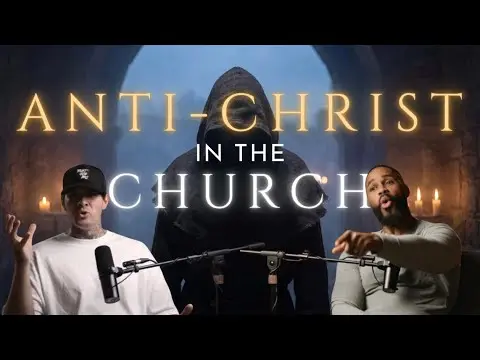
At 18:34 in Digital Social Hour, Wyatt begins a healing anecdote with “I saw,” then corrects himself. He prayed over a man at outreach, but did not see the standing his crew later reported. Sean Kelly’s questions help distinguish what Wyatt witnessed, what others told him, and what those experiences mean in his testimony.
The May 4, 2026 appearance combines a compressed testimony with expansive discussion of culture, spiritual power and Christian responsibility. Sean uses language about energy and frequency; Wyatt answers by speaking about Jesus, spiritual authority and being made in God’s image. Their vocabularies sometimes meet, but they are not interchangeable. In the final minutes, Wyatt brings the conversation back to mercy: does professing faith lead us to offer friendship and practical help?
Hearing the source of a story
Wyatt’s account of the outreach event contains several different elements. He says he prayed for a man whose legs he describes as paralyzed. He says he expressed confidence that God would help him walk. Later, his crew asked whether he had seen the man stand. Wyatt answered that he had moved on and had not seen it (18:34).
Wyatt remembers praying for the man and hearing about the standing from his crew. Keep his correction when retelling the anecdote. He had moved on before the reported outcome, so the account includes both something he did and something others later said they saw.
This is also a helpful listening habit beyond this one anecdote. Listen for what the person remembers doing and seeing. Were they present for the action, its result, or neither? Does their account contain a correction that improves its precision? Wyatt’s correction helps us share the testimony faithfully, keeping his prayer and his crew’s report together.
The card-reader story offers another example of how Wyatt learns about an outcome. He recalls being unsure why the shop closed, then receiving a message that he understood as confirmation of a conversion (21:19; 22:43). The closure and its meaning were separate questions for him. His later confidence rests on that reported message, a useful detail to keep when telling the story.
When two spiritual vocabularies share a room
Sean’s observation about fast food lowering energy or frequency appears at 04:18. Wyatt responds with a statement about human dignity in God’s image and then continues explaining what he regards as spiritual bondage. Their exchange connects different approaches to the subject while each explains what he believes.
That distinction becomes especially important at 39:01. Sean asks whether demons can have more power than God. Wyatt’s first response sounds affirmative, but he immediately specifies that he means what people imagine God to be. He then says they cannot exceed the real Jesus, whom he calls the conquering King.
Hear only the opening answer, and you could leave with the opposite of Wyatt’s point. Hear the rest, and his concern becomes clear: people may profess faith while imagining a God too weak to help them. He calls Jesus the conquering King. Sean’s question gives listeners a reason to pause a troubling clip, find the full exchange and hear what the speaker means.
At 44:37, Sean asks about astral projection. Wyatt describes experiences he believes occurred while worshiping Jesus, distinguishing them from seeking power for his own benefit. He asks whom an experience serves. Sean proposes a future debate (45:58), leaving questions for another conversation rather than settling them here.
The comfort that did not settle the problem
Wyatt’s compressed recovery history emphasizes surrender, but he also describes continuing shame after the encounter he credits with changing his life. Workdays remained difficult. He says returning to Scripture and worshiping outdoors gave him the hope he could not find through money or attention (15:51; 17:13).
Later, he retells the relationship with a voice he thought was Jesus. In his account, a sense of closeness and experiences that seemed to help others gradually persuaded him to accept things he now rejects (31:57; 33:21). He interprets that period as deception. The account’s practical question is why familiar Christian words seemed trustworthy when the relationship’s conduct became harmful.
Wyatt put this question to himself on his first We Need to Talk visit: sobriety had not meant repentance or change (43:34). On Sean’s show he puts it to the viewer. Does the relationship you profess with Jesus produce courage, obedience and concern for others (36:10; 37:35)? His testimony gives the challenge its personal cost. He is asking listeners to examine the gap he says he once ignored.
The test grows more demanding as the conversation continues. Sobriety had once let Wyatt overlook anger; confidence in one’s faith can likewise let a viewer overlook indifference. He asks whether belief makes a person more willing to obey, to approach someone and to care. You can begin that examination with a single avoided task: a conversation postponed, a need noticed and then passed by, or an offer you could still make.
The audience member who never leaves the screen
Wyatt’s criticism of passive viewing is unusually clear at 24:03. Discussing creators who share faith in public, he argues that their visibility can let other Christians feel involved while avoiding the same work themselves:
“we’re justifying not doing it by liking his content” (24:03)
Sean describes this as living vicariously through someone else. Wyatt says watching another person serve does not carry out service for the viewer. At 24:58, he particularly addresses people who have called themselves Christians for years, asking them to participate rather than only approve.
A reader can use that distinction without copying his intensity or seeking a dramatic encounter. Consider the most recent piece of outreach content you watched. Did it lead to any action available in your own circumstances? Perhaps a conversation, an offer of food, a visit or time spent with someone who is isolated. The point is to identify an actual recipient of care, rather than treating enthusiasm as the outcome.
On The Eternal Hour, Wyatt also warns that his preaching can distract someone from living their faith (The Eternal Hour, 1:29:27). Here he describes liking outreach content as a way to feel involved. Approval can occupy an intention to serve without leading to anyone receiving help.
Scripture becomes a question about what to give
Near the close, Wyatt names Isaiah 52:14 and Isaiah 53 while reflecting on Christ’s suffering (1:02:34). He connects his understanding of that suffering to what it means to be empowered by the Holy Spirit. For him, that power comes with responsibility toward people who are lost or in need.
Stay with the purpose of Wyatt’s reflection on Isaiah: he wants Christ’s suffering to change what Christians consider worth their time. The passages lead him toward sacrificial care. A useful way to follow the discussion is to read the chapters he names, then ask where your own attention goes when another person’s need becomes inconvenient.
At 1:03:36, he identifies mercy and friendship as needs that an impressive public display of faith may leave unmet. He then describes giving money when resources feel scarce and acting when fear says to stop (1:04:57; 1:06:08). Sean offers a useful addition: when money is unavailable, someone can give time. That exchange makes the closing concrete. Service can involve attention and presence as well as a financial gift.
Wyatt paraphrases Matthew 25’s hungry, clothed and imprisoned people at 1:06:08. In his reading, the person receiving care is not an interruption to devotion; caring for them is part of approaching Jesus. Readers can start with a need they can responsibly address and an offer they can keep. The episode’s invitation becomes usable when the scale of help matches the person and the circumstances in front of them.
The courage to correct a story
Return to 18:34 and 39:01 before sharing a clip from either exchange. Wyatt corrects whether he saw the reported standing and clarifies which conception of God he means. The later words in each answer change how a listener should understand the opening.
Wyatt’s willingness to qualify a story appears in other conversations too. On Pounders Quest, he cannot settle how long the shame lasted. On Unfiltered Freedom, he allows that a striking driving perception may have happened in his head. Here, the qualification concerns where he was when an outcome occurred. These admissions give listeners room to say what they heard clearly, without filling a gap with certainty the speaker did not supply.
The closing brings that same clarity to generosity. Money has an amount. Time occupies part of a day. Friendship means remaining interested after the exciting moment passes. Wyatt names these ordinary forms of care because the person receiving them needs more than someone else’s spiritual enthusiasm. Choose one you can offer, identify the person it could reach and make the offer concrete enough to accept.
Before you close the episode, stay for Sean’s suggestion that a person with little money can still give time. It answers the hesitation many viewers will bring to Wyatt’s challenge. Watch the full Digital Social Hour conversation for the complete power exchange and that final discussion of resources, then decide which small part of your week could become help someone actually receives.
Notes from the conversation
- Wyatt corrects himself during the healing story: he prayed for the man, but his crew reported the standing he did not see (18:34).
- Sean's question draws out Wyatt's contrast between an imagined weak God and Jesus, whom he says demons cannot surpass (39:01).
- Near the end, Wyatt asks viewers to offer friendship, money or time to someone in need (1:03:36–1:06:08).
Video moments
- 4:18Sean and Wyatt describe spiritual experience in different termsYouTube ↗
- 17:13Wyatt recalls worship while struggling with shameYouTube ↗
- 18:34A reported healing he did not personally observeYouTube ↗
- 22:43The hesitation he says love overcameYouTube ↗
- 24:03Online approval can replace participationYouTube ↗
- 39:01The full answer about demons and God's powerYouTube ↗
- 44:37Sean asks about astral projectionYouTube ↗
- 45:58They discuss a possible future debateYouTube ↗
- 1:02:34Isaiah and the responsibility Wyatt attaches to faithYouTube ↗
- 1:03:36Mercy and friendship for people in needYouTube ↗
- 1:06:08Money, time and the least-of-these teachingYouTube ↗
Scripture mentioned
- Revelation 17
- Isaiah 52:14
- Isaiah 53
- Matthew 25
This recording belongs to Digital Social Hour. Wyatt joins as a guest. The link above takes you to the original episode.