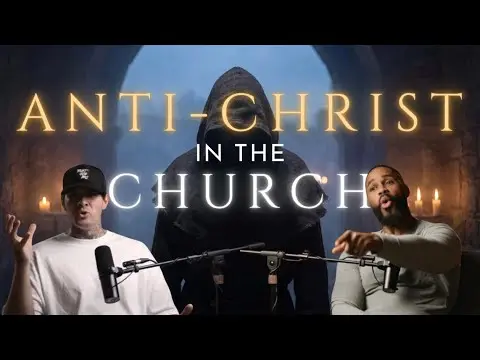
Wyatt notices the skulls in the HORRORble studio and says this setting feels different from his previous interviews. Askia “The Boogeyman” Booker asks about influence, identity, and why he came. Wyatt says he would have declined a year earlier, but now values two men with different outlooks talking openly (01:12; 1:31:40; 1:34:31).
In this August 12, 2026 appearance, Wyatt names a setback after rehabilitation and describes the change he believes followed. He also admits choices he now rejects. His explanation for entering an unfamiliar room sits alongside the testimony: he wants to be willing to hear people beyond the Christian audiences he usually speaks to.
The question beneath the frightening story
Askia’s most useful early intervention comes at 22:41. After hearing about destructive influence, he asks what someone should watch for so that it does not happen to them. The answer starts with worth. Wyatt tells listeners they need to know they are loved and important. Within his Christian understanding, that worth comes from being made in God’s image. He warns against letting another person become the controlling center of one’s life (22:41; 24:03).
This moves the conversation toward a recognizable problem: how a person who feels diminished can become dependent on the approval of someone harmful. Wyatt shares his testimony of spiritual deception, and Askia’s question brings the warning close to our own relationships. Does an interaction make honest disagreement possible? Does it encourage responsibility? Does its reassurance depend on surrendering judgment to the person offering it? These are questions suggested by the exchange, rather than a checklist Wyatt recites.
Wyatt reflects on adolescent exclusion as he shares his testimony (02:03). The emotional thread is easier to follow than every explanation he gives for it: feeling rejected fed anger, and anger made reassurance especially attractive. Askia’s question turns that history toward the listener. Where do you look for a sense of worth, and how much authority do you give the person who offers it?
At 13:04, Wyatt accepts responsibility for choices and boundaries he crossed. Keep that acknowledgment beside his explanation of outside influence. He describes his own conduct as part of what happened, rather than presenting himself only as someone affected by spiritual forces.
Trust grew through reassurance and apparent usefulness
The second half of the testimony describes a period when Wyatt says he was working successfully and trying to follow Jesus, while still carrying rage. He recalls a voice he understood as Jesus becoming part of his worship and ordinary life. In his telling, apparently successful conversations about faith helped persuade him that this guidance was trustworthy (1:07:00; 1:09:18).
Wyatt describes trust formed through Christian language, reassurance, and apparently good results. He says the relationship then moved into demands and destructive experiences. Here, he estimates roughly eight months of escalation (1:09:18; 1:10:41). Keep those steps in the account rather than describe the voice as deceptive without explaining why he trusted it.
His account therefore asks a difficult question about spiritual confidence: what evidence could make someone reconsider a relationship they already believe is sacred? A helpful moment cannot answer every later concern. Nor can a Christian vocabulary erase the behavior that follows it. Wyatt’s account repeatedly returns to the anger and compromise he says remained beneath his outwardly improved life.
In his first We Need to Talk appearance, he made the distinction between sobriety and repentance explicit (We Need to Talk, 43:34). HORRORble develops that point through the contrast between his working day and his private disorder. For the reader, the practical lesson is to examine the whole pattern of conduct. Public competence can coexist with unresolved harm, and a convincing presentation deserves scrutiny when the surrounding behavior contradicts it.
Faith spoken with a limit on memory
At 43:14, Wyatt briefly pauses his explanation to identify the status of what he is saying:
“when i say god tells me something that’s just from my own faith” (43:14)
Wyatt also says he cannot recall everything said during the ritual he describes. He is certain about the meaning he now gives it, while admitting gaps in the memory itself. Those two statements can stand together. Hear his faith as faith, and let his uncertainty remain where he places it. That is part of listening to him as a person rather than demanding a polished version of every difficult event.
Another boundary appears at 46:02. Wyatt describes injecting substances after being persuaded they would satisfy his craving for heroin. He says the resulting experience did not deliver what had been promised. He then acknowledges that he was already in psychosis (47:29). Wyatt is describing a dangerous episode and a false promise; he says the promised change did not happen.
Tony Merkel asks a related question on The Confessionals: did the injected substances actually become heroin, or was that only the promise Wyatt heard? Wyatt says the promise was false (1:03:13). Here, his own reference to psychosis and the failed promise points in the same direction. The danger he describes was real to him; the reassurance that led him toward it was misleading.
The setting also brings Wyatt’s views about entertainment into the room (48:51; 1:19:00). He interprets symbols and horror characters through his Christian convictions. Askia does not need to share those convictions for the conversation to continue. The more useful question is what Wyatt does with his discomfort: he stays, explains his convictions and later thanks the host for letting him speak. The room becomes a place to practice the openness he asks of others.
A setback he chooses to name
At 1:05:38, Wyatt first says he has been sober since the jail incident he credits as a turning point. He then adds that, after completing rehabilitation, he had a brief fentanyl slip and an overdose before stopping again. Both parts belong in the account. The accurate summary is that he describes a decisive commitment to recovery, followed by an acknowledged post-rehabilitation relapse.
Wyatt acknowledges the setback and continues describing his renewed commitment. A retelling should include both. Someone listening after a difficult return to drug use may recognize that sequence, but Wyatt’s account remains his own, rather than a prediction of how another person’s recovery will proceed.
His estimate of the later counterfeit relationship is rough too. He describes eight months of gradual escalation here; on Faith Unfolded he remembers roughly two months to a severe point. Rather than rushing past the development, listen for its steps: unresolved anger, useful guidance, growing trust and demands he stopped questioning. The pattern he recalls gives a reader more to examine than a single frightening instant.
During the field experience, Wyatt describes about ten minutes of spiritual release. He then recalls giving up inflated titles and receiving an assurance of love (1:20:27; 1:23:18). He contrasts being called a son with the power and special status he had previously sought.
The field scene closes this account sooner than it does in several earlier interviews. In those, Wyatt continues into Bible reading, lingering shame and a later mountain encounter. Remembering that longer account keeps the return to ordinary life in view. Here, the conversation turns instead toward the audience he is sitting with and the way Christians speak to people who see the world differently.
An unfamiliar room becomes part of the message
The other distinctive finding emerges when Askia asks why Wyatt agreed to come. Wyatt says this is a podcast he would not have done a year earlier. He explains his decision through faith, then expresses gratitude for being allowed to speak freely (1:31:40; 1:34:31). His confidence has expanded into willingness to meet an audience outside his usual Christian settings.
The testimony’s basic narrative appears in other interviews. This visit adds Wyatt’s explanation of choosing a setting where shared belief cannot be assumed. He speaks about entering the room and telling why he believes, while thanking a host who need not share his convictions.
Wyatt thanks Askia for allowing him to speak freely. In an unfamiliar room, he cannot assume everyone will agree with his testimony. The host nevertheless gives time and attention to the account, and Wyatt acknowledges that welcome while explaining his convictions.
At 1:34:31, he also insists that exhortation should come with practical help. He wants to make himself available to show people how to share their faith. The episode contains an event invitation tied to the recording period; its broader lesson is the commitment to teaching through participation. Readers can carry that question into their own work: if you urge someone to act, have you given them a usable first step?
Listening remains a demanding test
Wyatt’s final appeal is unusually direct toward Christians. He criticizes the habit of telling others to repent while refusing to hear their lives or perspectives (1:49:55). The exchange gives the interview a closing concern about how conviction is communicated, beyond whether it is held sincerely.
His closing appeal also asks something of him. Shortly beforehand, he interprets unsuccessful skeptical responses through two restrictive possibilities: an attempt to disprove his testimony or dishonesty. He labels that explanation as his opinion (1:48:31). The patience he asks of Christians remains necessary when someone questions his own testimony. Listening can be hardest when the answer disappoints us.
His return visit to Ezekiel offers a useful comparison. There, the practical instruction includes leaving when someone declines prayer and giving a gift regardless (We Need to Talk, 1:42:52). Together, the two discussions suggest a concrete measure for outreach: can someone refuse without losing respect or kindness? That question makes the closing challenge actionable.
Watch the original HORRORble episode for Askia’s questions and Wyatt’s complete answers, especially the recovery qualification at 1:05:38 and the audience discussion beginning at 1:31:40. They reveal a testimony still being clarified, and a speaker asking what it takes to bring firm belief into a conversation where the other person has room to speak.
Notes from the conversation
- Wyatt adds a brief fentanyl relapse and overdose after rehabilitation to his account of becoming sober (1:05:38).
- He says he would have declined this horror setting a year earlier and now values a conversation between men with different outlooks (1:31:40; 1:34:31).
- Wyatt closes by asking Christians to hear people out, after earlier remarks in which he questions skeptical responses (1:48:31; 1:49:55).
Video moments
- 1:12An unfamiliar setting for a Christian testimonyYouTube ↗
- 13:04Taking responsibility for his choicesYouTube ↗
- 22:41Askia asks about resisting destructive influenceYouTube ↗
- 37:41Askia helps Wyatt complete his five-part explanationYouTube ↗
- 43:14Wyatt explains his beliefs and the limits of his memoryYouTube ↗
- 1:05:38The post-rehabilitation slip he now acknowledgesYouTube ↗
- 1:09:18Gradual trust in a voice he believed was JesusYouTube ↗
- 1:20:27Recognizing deception during the field experienceYouTube ↗
- 1:31:40Wyatt explains why he now accepts a conversation he once declinedYouTube ↗
- 1:49:55A final appeal for Christians to hear people outYouTube ↗
This recording belongs to HORRORble Podcast. Wyatt joins as a guest. The link above takes you to the original episode.