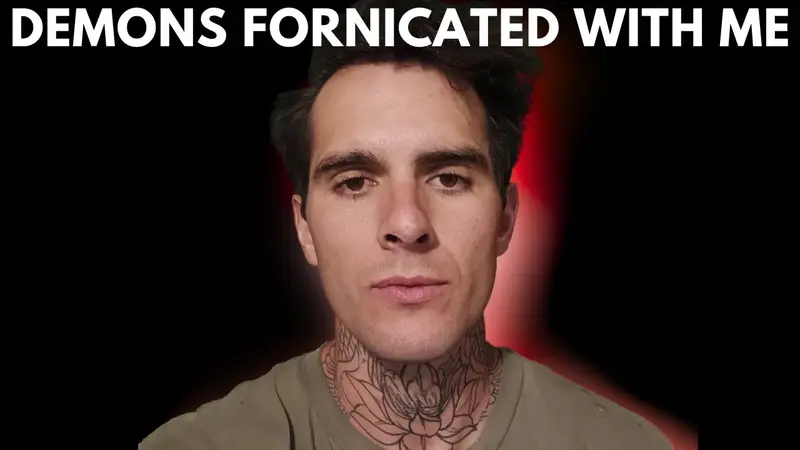
The instructions Wyatt recalls receiving after his encounter in a field are strikingly practical: read the Bible each day and take his medication. He places both inside a moment he understands as divine rescue (41:36). That pairing gives his conversation with Julie on Touching The Afterlife an essential place in his public story. Published on October 29, 2024, it is the earliest appearance in this collection, and it preserves considerable detail about the work of recovery after an extraordinary turning point.
Julie leaves much of the hour to Wyatt’s account, with relatively few interruptions. He shares his testimony of addiction, spiritual deception, forgiveness, treatment, worship, and outreach. After the field encounter, he says he was reading, working, and sharing faith while still struggling to receive love. That period helps explain the change he later describes in his ministry.
A good workday could leave an unchanged motive
Wyatt describes opioid use becoming part of school life during adolescence (03:14). Later, he remembers methadone treatment, steady carpentry work and material stability (06:09). Relapse, sleeplessness, dangerous behavior, jail and rehabilitation follow in his account. He credits a desperate appeal to Jesus with bringing help at 18:27. Listen beyond that appeal: his return to work opens the next question about what remained unresolved.
Pay attention to what follows rehabilitation. He can earn money and take responsibility for a workday while remaining bitter. At 21:11, he describes running his own work and employing someone, yet continues to emphasize anger and unresolved wrongs. A functioning business has restored part of his life without answering the question of what he wants to do with it.
Wyatt’s return to work restored some responsibilities while bitterness remained. He also recalls an earlier Christian identity accompanied by conduct he knew was wrong (08:53). In both accounts, Christian language or visible competence failed to address motives he says needed to change.
Wyatt places the next crisis after his return to work and worship. That sequence matters to his account of recovery. A productive day did not mean every difficulty was resolved, and a reader should hear what he says remained troubling as well as what improved.
Why the familiar voice was persuasive
At 23:50, Wyatt explains the relationship he says he formed with a spirit claiming to be Jesus. He looks back on that relationship as a failure to recognize a counterfeit. Its appeal involved friendship, apparently useful knowledge, spiritual authority, and the suggestion that he possessed a special place in a hidden story. His description makes reassurance part of the danger.
Familiar names reinforced that trust. He says the voice he recalls used titles he associated with God while introducing experiences he later understood differently (25:14). The account gradually becomes more disturbing, but the persuasive beginning matters: he believed he was being loved, guided, and entrusted with something important. Simply knowing Christian vocabulary had not equipped him to judge the direction in which the relationship was taking him.
Wyatt also describes conduct that he framed as helping other people, then later recognized as serving his own pride and desire (23:50; 35:02). This is where discernment becomes an examination of motives. The comforting explanation attached to an action can make honest self-scrutiny harder. Calling something service does not settle whose needs it actually serves.
In his testimony, Wyatt describes that relationship as spiritual deception. The moral question he raises is immediate: what did his trust permit him to justify? He admits wanting approval and accepting excuses that served his own desires. That admission makes the warning more useful. A reader can ask where a comforting account of their motives has made it harder to face what an action actually does to someone else.
Rebuilding includes the difficult middle
In the field scene, Wyatt says he recognized the deception, saw spirits departing, and received forgiveness from Jesus (40:08). He recalls an immediate return to ordinary behavior. He then describes taking medication, reading Scripture regularly, and beginning to share the Gospel (41:36).
Those details deserve to remain together. They complicate any abbreviated version in which spiritual rescue appears to eliminate the need for continued care. Wyatt himself includes treatment within the instructions he attributes to Jesus. Scripture becomes a daily practice rather than merely a phrase spoken at the turning point.
The later treatment sequence is difficult. Wyatt recalls feeling hazy and falling asleep early while taking medication (44:19). He says an attempt to stop immediately failed, followed by a taper lasting about three months (45:37). After a period he experienced as positive, he describes mounting stress, renewed voices, delusions, and another crisis at work (47:00). He then attributes renewed clarity to Jesus (48:23).
Wyatt is remembering his own treatment, including renewed symptoms after stopping. He does not name the medication or describe clinical supervision. A listener can hear the difficulty without turning his sequence into their own plan. In this telling, care after the field includes medication as well as Scripture, and the later crisis shows why the middle of recovery deserves attention. Keep a treatment decision with the people responsible for your care.
There is another unresolved element throughout this stretch: shame. He is already engaged in Bible reading and outreach, yet the tattoo on his neck still feels to him like an accusation. Recognizing deception and returning to work have not yet helped him receive the love he describes. That unfinished task leads to the next encounter.
The verse he had avoided
Wyatt says he read extensively but avoided Song of Songs because its intimacy felt unbearable (42:55; 44:19). He remembers approaching Scripture as an obligation while struggling to receive affection. Daily prayer and Bible reading continued during the shame he describes, rather than immediately resolving it.
During later mountain worship, Wyatt describes an encounter with Christ addressing that struggle (49:15). He says love first intensified his sense of unworthiness. He then identifies Song of Songs 4:4, with its image of a beautiful neck, a tower, and warriors’ shields, as changing the meaning of his tattoo (50:40).
Wyatt applies that poetic image personally. A mark he had understood as evidence of permanent defilement becomes, in his interpretation, a scar carrying a story of survival and redemption (52:06). He shares this as a personal encounter with Christ through Scripture: the verse’s image helped him face a visible reminder of the past with hope.
Wyatt places the mountain after the field because he describes different changes in each. The field brings recognition and forgiveness. Later, he says he experiences being loved without first demonstrating his worth. Hear the shame between those scenes when following his account of how outreach changed.
A bicycle tests the change
The next encounter begins with a mistake. Wyatt sees a man beside a bicycle and assumes he may be trying to steal it. He then learns that the bicycle belongs to him (53:35). Before telling a story about another person’s response to the Gospel, Wyatt reveals something requiring correction in himself.
He buys lunch and sits with the man. Wyatt recalls coming to understand God’s love for someone he had just judged (54:59). Before the conversation about faith, he had to correct his assumption about the bicycle. Sharing the meal gave him time to listen to its owner.
At 55:47, Wyatt connects the way he speaks over lunch with the love he believes he has received. He remembers a tearful profession of faith. What he wants to explain is the change in his own approach: he had already been active in outreach, but now he felt love behind the words. The shared meal connects that change with a concrete act of care and the mistaken judgment he first had to correct.
The practical value is in the correction and the meal, both of which are easy to miss if the listener concentrates only on the dramatic response. Wyatt’s account asks the reader to examine the first judgment made about someone nearby. An appearance, a possession, or an unfamiliar manner can become the basis of an accusation before a conversation has begun. His recollection shows him having to change that reading himself.
The part a quick testimony can skip
The instruction at 41:36 is worth returning to if you know Wyatt chiefly through shorter testimony clips. He pairs Bible reading with medication, then keeps describing the difficulties that follow. Later tellings move more quickly through this period. Julie’s conversation gives the listener time to stay with the work: taking medication, reading, functioning and struggling to receive the love he wants to tell others about.
Wyatt later tells Isaiah Saldivar that he does not want to condemn people trying to find appropriate medication (19:12). Keep that qualification beside his account here. He describes treatment, changing symptoms, and spiritual conviction over time, including needs that continued after the field encounter.
The field at 40:08 and the mountain beginning at 49:15 do different work in the story. Wyatt says the first changed his understanding of the relationship he now calls deceptive. Between them, he remembers practice and continued shame. The second addresses his ability to receive love. On Isaiah’s show he later names that difference as release and healing. Here, a listener can follow it through what changed in his ordinary days.
The bicycle scene gives that distinction a human test. After receiving love, Wyatt still makes a quick judgment about someone else. He has to learn that the bike belongs to the man beside it, revise his assumption and choose how to approach him. The love Wyatt describes now leads him to care for the person beside him. Lunch becomes a way to put care beside the corrected thought.
Listening for the next ordinary action
Three questions can make this conversation more useful on a return listen. First, what has changed at each turning point? Listen for changes in his conduct, understanding, and ability to receive love. The field, the medication-and-reading routine, and the mountain encounter address overlapping needs, but Wyatt does not describe them as interchangeable events.
Second, where does Christian language lead in practice? Follow the connection between an explanation and the conduct it allows. In the counterfeit account, affectionate reassurance makes harmful choices easier to justify. In the lunch account, love challenges an accusation and creates room for care. This comparison keeps the discussion of discernment close to actual decisions.
Third, what assumption might need correcting before offering help? The bicycle scene suggests a modest place to begin: ask rather than assume, listen before defining someone else’s problem, and make generosity tangible. A meal or a patient conversation can carry meaning without requiring a reader to reproduce Wyatt’s extraordinary experiences or predict the other person’s response.
Julie closes by bringing the conversation back to truth and deception through John 8:44 (1:00:57; 1:02:26). Her contribution frames the account without replacing Wyatt’s own voice. Hear the full Touching The Afterlife episode for the space between those themes: the paired instructions after the field, the difficult rebuilding, and the moment an ordinary lunch becomes the expression of love he had struggled to receive.
Notes from the conversation
- In this first appearance, Wyatt recalls daily Bible reading and medication, then difficult treatment changes and returning symptoms (41:36; 44:19–48:23).
- The field and mountain scenes address different needs in Wyatt's account: recognizing deception, then receiving love amid continued shame (40:08; 49:15–52:06).
- The bicycle story begins with Wyatt correcting his own suspicion, before buying lunch and speaking about the love he believes he received (53:35–55:47).
Video moments
- 3:14Opioid dependence begins during school yearsYouTube ↗
- 18:27Jail, rehabilitation, and the help Wyatt credits to JesusYouTube ↗
- 21:11Work resumes while bitterness remainsYouTube ↗
- 23:50Wyatt describes a spiritual friendship he later rejectedYouTube ↗
- 40:08The field encounter and recognition of deceptionYouTube ↗
- 41:36Wyatt recalls instructions to read Scripture and take medicationYouTube ↗
- 45:37Wyatt recounts difficulty stopping medication and a taperYouTube ↗
- 47:00Renewed stress, voices, and delusions in his accountYouTube ↗
- 49:15Mountain worship becomes another turning pointYouTube ↗
- 50:40Song of Songs 4:4 changes how he sees his neck tattooYouTube ↗
- 53:35An assumption about a bicycle gives way to lunchYouTube ↗
- 55:47Receiving love changes how he speaks to someone elseYouTube ↗
Scripture mentioned
- Song of Songs 4:4
- John 8:44
This recording belongs to Touching The Afterlife. Wyatt joins as a guest. The link above takes you to the original episode.